NLP Tutorial - GloVe Vectors Embedding with TF2.0 and Keras
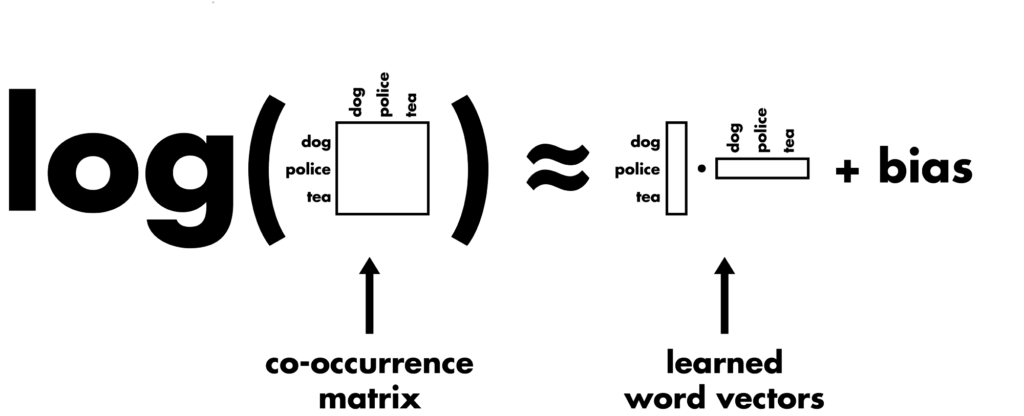
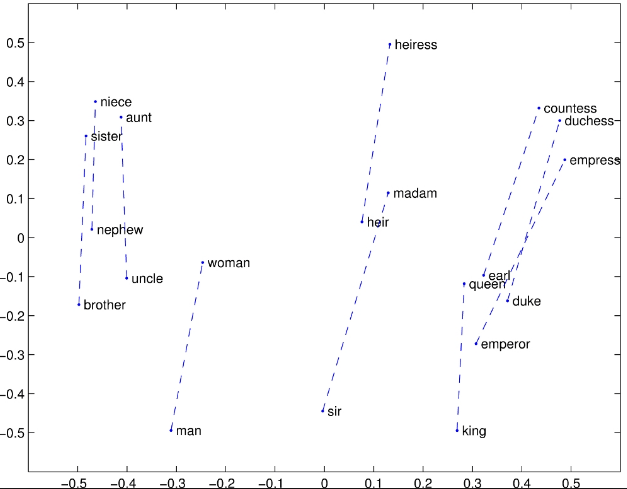
GloVe stands for global vectors for word representation. It is an unsupervised learning algorithm developed by Stanford for generating word embeddings by aggregating a global word-word co-occurrence matrix from a corpus. The resulting embeddings show interesting linear substructures of the word in vector space.
Ref:
Glove Vectors:
GloVe: Global Vectors for Word Representation
Common Crawl (840B tokens, 2.2M vocab, cased, 300d vectors, 2.03 GB download):
Download glove.840B.300d.zip (2.03 GB)
Twitter (2B tweets, 27B tokens, 1.2M vocab, uncased, 25d, 50d, 100d, & 200d vectors, 1.42 GB download):
Download glove.twitter.27B.zip (1.42 GB)
Watch Full Video:
Notebook Setup
Importing Libraries
from tensorflow.keras.preprocessing.text import Tokenizer
from tensorflow.keras.preprocessing.sequence import pad_sequences
from tensorflow.keras.models import Sequential
from tensorflow.keras.layers import Dense,Flatten,Embedding,Activation, Dropout
from tensorflow.keras.layers import Conv1D, MaxPooling1D, GlobalMaxPooling1D
from tensorflow.keras.optimizers import Adam

import numpy as np
from numpy import array
import pandas as pd

from sklearn.model_selection import train_test_split
python
#reading dataset

df = pd.read_csv('twitter4000.csv')
df.head()| twitts | sentiment | |
|---|---|---|
| 0 | is bored and wants to watch a movie any sugge... | 0 |
| 1 | back in miami. waiting to unboard ship | 0 |
| 2 | @misskpey awwww dnt dis brng bak memoriessss, ... | 0 |
| 3 | ughhh i am so tired blahhhhhhhhh | 0 |
| 4 | @mandagoforth me bad! It's funny though. Zacha... | 0 |
Preprocessing and Cleaning
Here, we are doing the text processing where we are performing below steps :
- Expanding the contracted words or tokens
- Removing Email
- Removing URLs and HTML tags
- Removing 'RT' retweet tags
- Replacing all non-alphabets values with null
We are defining a dictionary contractions to replace all the short text values with their corresponding expanded values.
#dictionary `contractions` to replace all the short text values with their corresponding the expanded values
#you can add more values as per your requirements.

contractions = {
"ain't": "am not",
"aren't": "are not",
"can't": "cannot",
"can't've": "cannot have",
"'cause": "because",
"could've": "could have",
"couldn't": "could not",
"couldn't've": "could not have",
"didn't": "did not",
"doesn't": "does not",
"don't": "do not",
"hadn't": "had not",
"hadn't've": "had not have",
"hasn't": "has not",
"haven't": "have not",
"he'd": "he would",
"he'd've": "he would have",
"he'll": "he will",
"he'll've": "he will have",
"he's": "he is",
"how'd": "how did",
"how'd'y": "how do you",
"how'll": "how will",
"how's": "how does",
"i'd": "i would",
"i'd've": "i would have",
"i'll": "i will",
"i'll've": "i will have",
"i'm": "i am",
"i've": "i have",
"isn't": "is not",
"it'd": "it would",
"it'd've": "it would have",
"it'll": "it will",
"it'll've": "it will have",
"it's": "it is",
"let's": "let us",
"ma'am": "madam",
"mayn't": "may not",
"might've": "might have",
"mightn't": "might not",
"mightn't've": "might not have",
"must've": "must have",
"mustn't": "must not",
"mustn't've": "must not have",
"needn't": "need not",
"needn't've": "need not have",
"o'clock": "of the clock",
"oughtn't": "ought not",
"oughtn't've": "ought not have",
"shan't": "shall not",
"sha'n't": "shall not",
"shan't've": "shall not have",
"she'd": "she would",
"she'd've": "she would have",
"she'll": "she will",
"she'll've": "she will have",
"she's": "she is",
"should've": "should have",
"shouldn't": "should not",
"shouldn't've": "should not have",
"so've": "so have",
"so's": "so is",
"that'd": "that would",
"that'd've": "that would have",
"that's": "that is",
"there'd": "there would",
"there'd've": "there would have",
"there's": "there is",
"they'd": "they would",
"they'd've": "they would have",
"they'll": "they will",
"they'll've": "they will have",
"they're": "they are",
"they've": "they have",
"to've": "to have",
"wasn't": "was not",
" u ": " you ",
" ur ": " your ",
" n ": " and "}
In the below function get_clean_text(), we are performing all the data cleaning activities like expanding the contracted words or tokens, removing Email , removing URLs and HTML tags , removing 'RT' retweet tags and replacing all non alphabets values with null
%%time
import re

text = ' '.join(df['twitts'])
text = text.split()
freq_comm = pd.Series(text).value_counts()
rare = freq_comm[freq_comm.values == 1]

def get_clean_text(x):
    if type(x) is str:
        x = x.lower()
        for key in contractions:
            value = contractions[key]
            x = x.replace(key, value)
        x = re.sub(r'([a-zA-Z0-9+._-]+@[a-zA-Z0-9._-]+\.[a-zA-Z0-9_-]+)', '', x)
        #regex to remove to emails
        x = re.sub(r'(http|ftp|https)://([\w_-]+(?:(?:\.[\w_-]+)+))([\w.,@?^=%&:/~+#-]*[\w@?^=%&/~+#-])?', '', x)
        #regex to remove URLs
        x = re.sub('RT', "", x)
        #substitute the 'RT' retweet tags with empty spaces
        x = re.sub('[^A-Z a-z]+', '', x)
        #combining all the text excluding rare words.
        x = ' '.join([t for t in x.split() if t not in rare])
        return x
    else:
        return x

df['twitts'] = df['twitts'].apply(lambda x: get_clean_text(x))Wall time: 567 ms
#displaying the cleaned texts
df['twitts']
0 is bored and wants to watch a movie any sugges...
1 back in miami waiting to
2 misskpey awwww dnt bak memoriessss i i am sad lol
3 ughhh i am so tired
4 mandagoforth me bad it is funny though zachary...
...
3995 i just
3996 templating works it all has to be done
3997 mommy just brought me starbucks
3998 omarepps watching you on a house rerunlovin it
3999 thanks for trying to make me smile i will make...
Name: twitts, Length: 4000, dtype: object
#displaying the categorical values
df['sentiment'].value_counts()
1 2000
0 2000
Name: sentiment, dtype: int64#conversion to list and then displaying the list
text = df['twitts'].tolist()
text[:3]['is bored and wants to watch a movie any suggestions', 'back in miami waiting to', 'misskpey awwww dnt bak memoriessss i i am sad lol']#storing the values of sentiment column to variable y
y = df['sentiment']#tokenizer to read all the words present in our corpus
token = Tokenizer()
token.fit_on_texts(text)#declaring the vocab_size
vocab_size = len(token.word_index) + 1
vocab_size6793#conversion to numerical formats
encoded_text = token.texts_to_sequences(text)#printing the values of encoded texts of top 3 rows
print(encoded_text[:3])[[5, 279, 9, 315, 2, 182, 4, 217, 202, 2298], [48, 10, 1299, 183, 2], [2299, 1087, 655, 1300, 2300, 1, 1, 13, 114, 46]]#'max_length' = 120 means we are considering max 120 words or token only
#padding='post' means that we padding post the sentence(keeping values 0 if the tokens are not there)
max_length = 120
X = pad_sequences(encoded_text, maxlen=max_length, padding='post')print(X)[[ 5 279 9 ... 0 0 0]
[ 48 10 1299 ... 0 0 0]
[2299 1087 655 ... 0 0 0]
...
[ 936 22 925 ... 0 0 0]
[6791 125 7 ... 0 0 0]
[ 88 12 209 ... 0 0 0]]
#printing the dimension of X array
X.shape
(4000, 120)GloVe Vectors
# you -0.11076 0.30786 -0.5198 0.035138 0.10368 -0.052505...... -0.35471 0.2331 -0.0067546 -0.18892 0.27837 -0.38501 -0.11408 0.28191 -0.30946 -0.21878 -0.059105 0.47604 0.05661

#our first text is key and rest are there vector representation in glove#displaying the column 'twitts' of dataframe
df['twitts']0 is bored and wants to watch a movie any sugges...
1 back in miami waiting to
2 misskpey awwww dnt bak memoriessss i i am sad lol
3 ughhh i am so tired
4 mandagoforth me bad it is funny though zachary...
...
3995 i just
3996 templating works it all has to be done
3997 mommy just brought me starbucks
3998 omarepps watching you on a house rerunlovin it
3999 thanks for trying to make me smile i will make...
Name: twitts, Length: 4000, dtype: object#declaring dict to store all the words as keys in the dictionary and their vector representations as values
glove_vectors = dict()%%time
# file = open('glove.twitter.27B.200d.txt', encoding='utf-8')
file = open('glove.twitter.27B.200d.txt', encoding='utf-8')
for line in file:
values = line.split()
word = values[0]
#storing the word in the variable
vectors = np.asarray(values[1: ])
#storing the vector representation of the respective word in the dictionary
glove_vectors[word] = vectors
file.close()Wall time: 2min 43s#printing length of glove vectors
len(glove_vectors)1193514keys = glove_vectors.keys()
len(keys)1193514We have total 1193514 key values pairs in our dictionary of glove vectors
glove_vectors.get('aassrfdfa')glove_vectors.get('you').shape(200,)Observation:
You can see above that misspelled words are not having their vector representation.
Since we have taken the glove vectors of 200 dimensions, that's why the word 'you' is having 200 values.
Now we are creating a matrix for the tokens which we are having in our dataset and then storing their vector representation values in the matrix if it matches with glove_vectors words else print the misspelled words or words which are not present.
word_vector_matrix = np.zeros((vocab_size, 200))

for word, index in token.word_index.items():
    vector = glove_vectors.get(word)
    if vector is not None:
        word_vector_matrix[index] = vector
    else:
print(word)tommcfly
dougiemcfly
donniewahlberg
kirstiealley
quotthe
peterfacinelli
davidarchie
grrrrls
modelsupplies
powersellingmom
princesangelsky
.
.
.
freshplastic
repressd
errrr
wijnia
donniewahlbergllllllloooooooovvvvvvvvvvveeeeeeeeee
markhallcc
scoutnarrator
aeriagames
bballlifeword_vector_matrix[0]array([0., 0., 0., 0., 0., 0., 0., 0., 0., 0., 0., 0., 0., 0., 0., 0., 0.,
0., 0., 0., 0., 0., 0., 0., 0., 0., 0., 0., 0., 0., 0., 0., 0., 0.,
0., 0., 0., 0., 0., 0., 0., 0., 0., 0., 0., 0., 0., 0., 0., 0., 0.,
0., 0., 0., 0., 0., 0., 0., 0., 0., 0., 0., 0., 0., 0., 0., 0., 0.,
0., 0., 0., 0., 0., 0., 0., 0., 0., 0., 0., 0., 0., 0., 0., 0., 0.,
0., 0., 0., 0., 0., 0., 0., 0., 0., 0., 0., 0., 0., 0., 0., 0., 0.,
0., 0., 0., 0., 0., 0., 0., 0., 0., 0., 0., 0., 0., 0., 0., 0., 0.,
0., 0., 0., 0., 0., 0., 0., 0., 0., 0., 0., 0., 0., 0., 0., 0., 0.,
0., 0., 0., 0., 0., 0., 0., 0., 0., 0., 0., 0., 0., 0., 0., 0., 0.,
0., 0., 0., 0., 0., 0., 0., 0., 0., 0., 0., 0., 0., 0., 0., 0., 0.,
0., 0., 0., 0., 0., 0., 0., 0., 0., 0., 0., 0., 0., 0., 0., 0., 0.,
0., 0., 0., 0., 0., 0., 0., 0., 0., 0., 0., 0., 0.])Model building
#splitting the dataset into train and test dataset

X_train, X_test, y_train, y_test = train_test_split(X, y, random_state = 42, test_size = 0.2, stratify = y)
Now, we are building a model using Tensorflow.Keras library below.
Below are explanation of each parameters which we are passing :
-vocab_size : This is the input dimension in which we will take all the tokens present in our dataset.
-vec_size : This is the size of the vector space in which words will be embedded.
-input_length : This is the length of input sequences, as you would define for any input layer of a Keras model.
-weights : Here we are taking pretrained weights of each word.
-trainable : Here, we do not want to update the learned word weights in this model(since we are using glove vectors here), therefore we will set the trainable attribute for the model to be False.
vec_size = 200

model = Sequential()
model.add(Embedding(vocab_size, vec_size, input_length=max_length, weights = [word_vector_matrix], trainable = False))

model.add(Conv1D(64, 8, activation = 'relu'))
#here 64 is number of filters and 8 is size of filters
model.add(MaxPooling1D(2))
model.add(Dropout(0.5))

model.add(Dense(32, activation='relu'))
model.add(Dropout(0.5))

model.add(Dense(16, activation='relu'))

model.add(GlobalMaxPooling1D())

model.add(Dense(1, activation='sigmoid'))

model.compile(optimizer=Adam(learning_rate = 0.0001), loss = 'binary_crossentropy', metrics = ['accuracy'])

model.fit(X_train, y_train, epochs = 30, validation_data = (X_test, y_test))Train on 3200 samples, validate on 800 samples
Epoch 1/30
3200/3200 [==============================] - 10s 3ms/sample - loss: 0.7431 - acc: 0.5000 - val_loss: 0.6940 - val_acc: 0.4975
Epoch 2/30
3200/3200 [==============================] - 3s 933us/sample - loss: 0.7102 - acc: 0.5231 - val_loss: 0.6836 - val_acc: 0.5625
Epoch 3/30
3200/3200 [==============================] - 3s 826us/sample - loss: 0.6977 - acc: 0.5384 - val_loss: 0.6781 - val_acc: 0.5975
.
.
.
.
loss: 0.4928 - acc: 0.7688 - val_loss: 0.5388 - val_acc: 0.7387
Epoch 27/30
3200/3200 [==============================] - 2s 730us/sample - loss: 0.4884 - acc: 0.7744 - val_loss: 0.5364 - val_acc: 0.7375
Epoch 28/30
3200/3200 [==============================] - 2s 710us/sample - loss: 0.4819 - acc: 0.7734 - val_loss: 0.5368 - val_acc: 0.7425
Epoch 29/30
3200/3200 [==============================] - 2s 706us/sample - loss: 0.4697 - acc: 0.7837 - val_loss: 0.5320 - val_acc: 0.7337
Epoch 30/30
3200/3200 [==============================] - 3s 810us/sample - loss: 0.4668 - acc: 0.7866 - val_loss: 0.5312 - val_acc: 0.7400#here we will clean text using the same method as we have done above
#using same token object we have used here which we have used during training dataset
def get_encode(x):
x = get_clean_text(x)
x = token.texts_to_sequences(x)
x = pad_sequences(x, maxlen=max_length, padding='post')
return xget_encode(["i hi how are you isn't"])array([[ 1, 318, 77, 37, 7, 0, 0, 0, 0, 0, 0, 0, 0,
0, 0, 0, 0, 0, 0, 0, 0, 0, 0, 0, 0, 0,
0, 0, 0, 0, 0, 0, 0, 0, 0, 0, 0, 0, 0,
0, 0, 0, 0, 0, 0, 0, 0, 0, 0, 0, 0, 0,
0, 0, 0, 0, 0, 0, 0, 0, 0, 0, 0, 0, 0,
0, 0, 0, 0, 0, 0, 0, 0, 0, 0, 0, 0, 0,
0, 0, 0, 0, 0, 0, 0, 0, 0, 0, 0, 0, 0,
0, 0, 0, 0, 0, 0, 0, 0, 0, 0, 0, 0, 0,
0, 0, 0, 0, 0, 0, 0, 0, 0, 0, 0, 0, 0,
0, 0, 0]])#predicting on text
model.predict_classes(get_encode(['thank you for watching']))array([[1]])Conclusion
In this tutorial you built a Twitter sentiment classifier using pre-trained 200-dimensional GloVe Twitter vectors as frozen embedding weights in a Conv1D model. After cleaning 4,000 tweets, encoding them to padded sequences of length 120, and loading 1.19 million GloVe word vectors into a fixed embedding matrix, the Conv1D model reached 74% validation accuracy after 30 epochs — without updating any word vectors during training.
Key takeaways:
- Setting
trainable=Falseon the Embedding layer freezes the GloVe weights and prevents them from being overwritten during backpropagation — this preserves the rich semantic structure learned from 27 billion tweets. - Words absent from the GloVe vocabulary (usernames, misspellings like "tommcfly") receive a zero vector; this is why text cleaning and rare-word removal directly improve embedding coverage.
- Conv1D treats each position in the sequence as a spatial location and learns local n-gram-like features;
GlobalMaxPooling1Dthen selects the strongest feature across all positions regardless of where it appears in the tweet. - Binary cross-entropy with a single sigmoid output node is the correct setup for binary sentiment — it predicts
P(positive)directly and does not require a second output for the negative class.
Next steps:
- Replace Conv1D with an LSTM to compare sequential feature learning against the local pattern matching Conv1D uses in IMDB Sentiment Classification with LSTM.
- Try the 300-dimensional Common Crawl GloVe vectors instead of the 200-dimensional Twitter variant to see whether richer embeddings improve accuracy on informal text.
- Fine-tune BERT for the same task in Sentiment Classification Using BERT for a state-of-the-art comparison.